Learn why body composition can change in your 40s and during perimenopause, and how strength training, muscle, sleep, nutrition and movement can help.
When the Things That Used to Work Don’t Seem to Work Anymore
Maybe the number on the scale hasn’t changed very much.
But your clothes fit differently.
Your waist feels different.
You notice less muscle definition in your arms or legs.
Or perhaps your weight has changed, even though you don’t feel like you’ve dramatically changed how you eat or move.
For many women, body changes become particularly noticeable sometime in their late 30s, 40s, or 50s.
And they can be frustrating.
You may find yourself wondering:
Why is my body changing when I’m doing the same things I’ve always done?
The answer is more complicated than simply “your metabolism slows down.”
Our bodies change throughout adulthood. Muscle mass, activity, hormones, sleep, stress, and the way our bodies store fat can all change over time.
For women entering perimenopause and menopause, hormonal changes can add another layer.
Understanding body composition can provide a much more useful way to think about these changes than focusing only on weight.
What Does Body Composition Actually Mean?
Body composition describes what your body is made of rather than simply how much it weighs.
Your body includes:
- Muscle
- Fat
- Bone
- Organs
- Water
- Other tissues
Two people can weigh exactly the same amount and have very different body compositions.
Even your own body can change while the number on the scale stays relatively stable.
For example, if you gradually lose some muscle and gain some body fat, your weight may barely change.
But you may notice that your body looks, feels, or functions differently.
This is one reason the scale tells us only part of the story.
Why Does Body Composition Change as We Get Older?
Our bodies are always changing.
One important change is that maintaining muscle becomes increasingly important as we move through adulthood.
Without enough resistance training and physical activity, adults can gradually lose muscle mass with age.
That matters for much more than appearance.
Muscle helps us:
- Lift and carry
- Climb stairs
- Participate in sports and activities
- Maintain balance
- Support our joints
- Maintain physical independence
- Manage blood sugar
- Support metabolic health
If muscle decreases while body fat increases, your body composition can change even without a dramatic change in weight.
The good news is that muscle remains responsive to training.
Getting older does not mean becoming weaker is inevitable.
What Happens During Perimenopause?
Perimenopause is the transition leading up to menopause, when hormones including estrogen begin to fluctuate and eventually decline.
For many women, this transition begins sometime in their 40s, although timing varies.
You may notice changes in:
- Menstrual cycles
- Sleep
- Mood
- Energy
- Hot flashes
- Exercise recovery
- Muscle and joint comfort
- Body composition
One particularly noticeable change can be where body fat tends to accumulate.
Before menopause, women are more likely to store a greater proportion of fat around the hips and thighs.
During and after the menopause transition, fat distribution may shift more toward the abdomen.
That means your waistline may change even if your overall weight hasn’t changed dramatically.
If you’ve noticed that your body suddenly seems to carry weight differently than it did ten years ago, you aren’t necessarily imagining it.
Is Perimenopause Making Me Gain Weight?
This question doesn’t have a simple yes-or-no answer.
The menopause transition can influence body composition and fat distribution, but aging, activity levels, sleep, nutrition, stress, and other factors also contribute to changes in body weight.
It can be tempting to blame everything on hormones.
It can also be tempting to pretend hormones don’t matter at all.
Neither approach is particularly helpful.
Your body exists in context.
Hormones may be changing at the same time that you’re sleeping less, working more, raising children, caring for parents, exercising differently, or simply moving less throughout the day than you did when you were younger.
Rather than searching for one culprit, it is usually more useful to look at the bigger picture.
Does Your Metabolism Really Slow Down After 40?
You may have heard that your metabolism falls off a cliff once you turn 40.
The reality is more nuanced.
Your energy needs can change with age, but there isn’t a switch that suddenly flips on your 40th birthday.
Changes in muscle mass and activity can influence how much energy your body uses.
Daily movement can change too.
You may have played recreational sports in your 20s, walked to work, chased young children around, or simply spent less time sitting.
Over the years, those small differences in movement can add up.
Rather than assuming your metabolism is “broken,” it can be more helpful to focus on the things you can influence — particularly maintaining muscle, staying active, eating adequately, sleeping well, and finding sustainable habits.
Why Muscle Matters So Much
When people think about changing body composition, they often immediately think about losing fat.
But building and maintaining muscle deserves just as much attention.
Muscle supports your physical function now and your independence later.
It also gives you something positive to work toward.
Instead of asking only:
How much weight can I lose?
You can ask:
Can I become stronger?
Can you carry heavier groceries?
Lift your suitcase into an overhead compartment?
Pick something up from the floor comfortably?
Do a push-up?
Carry your child or grandchild?
Keep playing the sport you enjoy?
Feel confident lifting something heavy?
Those are meaningful measures of progress.
Strength Training Becomes Increasingly Important
If you want to support muscle as you age, resistance training is one of the most useful tools available.
That might include:
- Dumbbells
- Barbells
- Weight machines
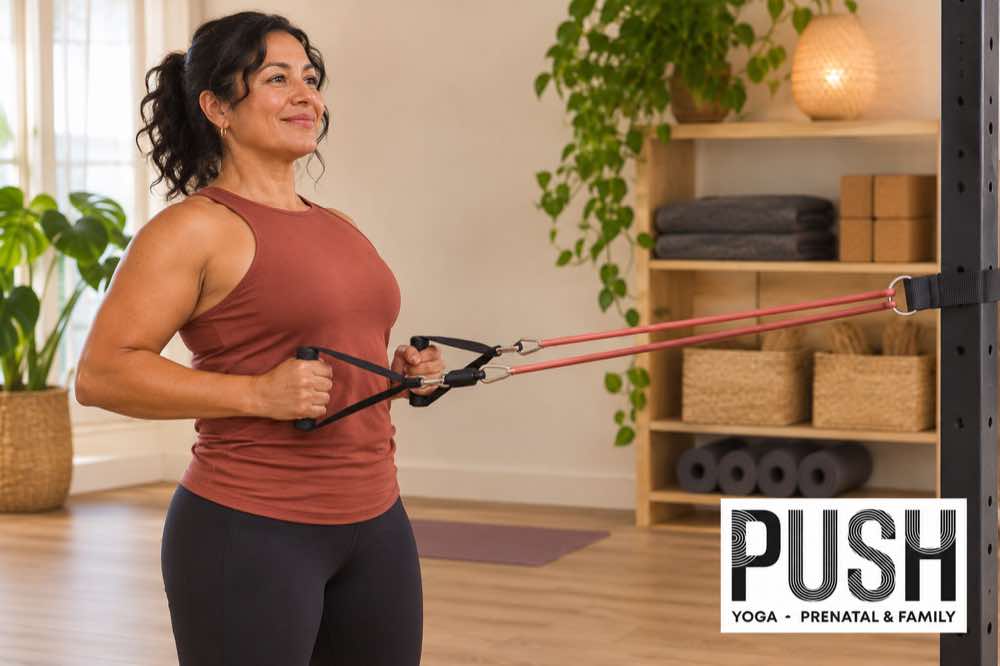
- Resistance bands
- Kettlebells
- Body-weight exercises
You don’t have to become a bodybuilder.
You don’t even have to think of yourself as someone who “lifts weights.”
But your muscles need enough resistance to have a reason to adapt.
Over time, strength training can help you maintain or build muscle, improve strength, and support bone health.
For women approaching menopause, those benefits become particularly valuable.
Will Lifting Weights Make Me Bulky?
This concern still prevents some women from strength training.
Building large amounts of muscle is difficult and usually requires substantial, intentional training over time.
For most women, becoming stronger does not suddenly result in an extremely muscular appearance.
What strength training can do is help preserve the muscle your body needs for everyday life.
And if you are trying to change your body composition, preserving muscle is particularly important.
The goal should not simply be to make the number on the scale decrease.
You want to maintain the tissue that helps keep you strong.
Is Walking Enough?
Walking is excellent exercise.
It supports cardiovascular health, daily activity, mood, and general well-being.
Keep walking.
But walking and strength training do different things.
Walking does not usually provide enough resistance to maximize muscle and bone-strengthening benefits.
Rather than choosing between them, think about combining them.
Walk because walking is good for you.
Strength train because strength is good for you.
Your body benefits from both.
What About Cardio?
Cardiovascular exercise still matters.
Running, cycling, swimming, hiking, brisk walking, sports, and other aerobic activities support cardiovascular fitness and overall health.
You do not need to abandon cardio because you have turned 40.
But if your exercise routine has always been almost entirely cardio, adding strength training may provide something your body has been missing.
A balanced routine can include both.
Nutrition Matters — But You Don’t Need a Perfect Diet
Body composition conversations can quickly become conversations about restriction.
Eat less.
Cut carbohydrates.
Skip breakfast.
Stop eating after a certain time.
Try fasting.
Avoid entire food groups.
There is no shortage of advice.
But a sustainable approach to nutrition should support your health, energy, and activity — not leave you constantly hungry and thinking about food.
One nutrient that becomes particularly relevant when trying to maintain or build muscle is protein.
Protein provides the building blocks your body uses to repair and maintain muscle tissue.
Including protein regularly throughout the day can help support muscle, particularly when combined with resistance training.
That doesn’t mean you need to live on protein shakes and chicken breast.
Protein can come from foods such as:
- Fish
- Poultry
- Meat
- Eggs
- Greek yogurt
- Cottage cheese
- Milk
- Tofu
- Tempeh
- Lentils
- Beans
- Soy foods
- Nuts and seeds
The best eating pattern is one you can realistically maintain while still enjoying food and participating in your life.
Eating Less Isn’t Always the Best First Step
If your body changes, the instinct may be to immediately cut calories.
Sometimes dietary changes may be appropriate.
But continually eating less while doing more exercise can become difficult to sustain.
It may also make it harder to train effectively and maintain muscle if nutrition becomes overly restrictive.
If changing body composition is one of your goals, think beyond simply making yourself smaller.
Ask whether you are supporting the body you want to build.
Are you eating enough protein?
Are you strength training?
Are you sleeping?
Are you recovering?
Are your habits sustainable?
A healthy body composition strategy should support your health rather than consume your life.
Sleep Can Affect More Than Your Energy
Poor sleep doesn’t just make you tired.
Sleep can affect appetite, food choices, energy, mood, exercise performance, and recovery.
After a bad night’s sleep, you may feel hungrier.
You may have less energy to exercise.
You may crave foods that provide quick energy.
Your workout may feel harder.
And when poor sleep continues for weeks or months, maintaining healthy routines becomes much more difficult.
This is particularly relevant during perimenopause, when sleep disturbances can become more common.
Sometimes supporting body composition means looking beyond food and exercise.
Sleep matters too.
Stress Matters Too
Stress doesn’t magically create body fat regardless of everything else happening in your life.
But chronic stress can affect behaviours that influence your health.
When you’re overwhelmed, you may sleep poorly.
Exercise becomes harder to fit in.
Meals become whatever is quickest.
Alcohol may become a way to unwind.
You may have little energy left for yourself after managing work and family responsibilities.
This is where the mental load of everyday life becomes relevant.
A wellness plan that assumes you have unlimited time, energy, and motivation isn’t a very useful plan.
Your approach needs to work within your actual life.
What About Cortisol?
Cortisol gets blamed for almost everything online.
It is often presented as the reason for abdominal weight gain, fatigue, poor sleep, cravings, and difficulty losing weight.
Cortisol is an important hormone involved in the body’s stress response.
But the idea that you simply need to “lower your cortisol” to lose abdominal fat dramatically oversimplifies human physiology.
You do not need a special supplement, detox, or cortisol-reset program.
Managing stress, sleeping adequately, eating well, and exercising appropriately are worthwhile for many reasons.
You can do those things without assuming cortisol is the explanation for every change in your body.
Can You Lose Fat and Gain Muscle at the Same Time?
Sometimes.
This is often called body recomposition.
It may be particularly achievable for people who are newer to strength training, returning after time away, or improving their training and nutrition.
But changes can be gradual.
And the scale may not accurately reflect what is happening.
If you gain some muscle while losing some fat, your weight may change less than you expected.
That doesn’t mean nothing is working.
This is why it can be helpful to have other ways of measuring progress.
Better Ways to Think About Progress
The scale can be one piece of information if it is useful to you.
But it does not have to be the only one.
You might also notice:
- You’re lifting heavier weights
- Everyday tasks feel easier
- You have more energy
- Your clothes fit differently
- You can walk or run farther
- Your balance has improved
- Your joints feel better
- You recover more easily
- You’re able to do activities you previously avoided
- You simply feel stronger
These changes matter.
Your body is something you live in, not just something you measure.
What About Body Composition Scales and Scans?
Smart scales, bioelectrical impedance devices, DEXA scans, and other technologies can estimate aspects of body composition.
They can sometimes provide useful information.
But no measurement is perfect.
Hydration, food intake, timing, device quality, and the measurement method itself can influence results.
If you use body composition measurements, trends over time are often more meaningful than obsessing over a single reading.
And remember that a body-fat percentage is still just a number.
It does not tell you how strong you are, how well you move, how you sleep, how you feel, or how healthy your relationship with exercise and food is.
What If My Main Goal Really Is Weight Loss?
That is okay.
Wanting to lose weight does not make you vain or mean that you don’t appreciate your body.
Your goals are allowed to be your goals.
But it can be helpful to pursue weight change within a bigger picture of health.
Instead of asking only how quickly you can lose weight, consider how you can do it while maintaining muscle, eating adequately, staying active, and building habits you can continue.
Extreme approaches may produce quick changes.
Sustainable approaches are usually less dramatic.
They are also more compatible with actually living your life.
Your Body After Pregnancy May Be Different Too
Pregnancy can change the abdominal wall, pelvic floor, hips, breasts, connective tissues, and overall body composition.
Some changes resolve relatively quickly.
Others may persist.
If you have had multiple pregnancies, your body may not look or feel exactly as it did before having children.
That doesn’t mean something has gone wrong.
And postpartum recovery doesn’t need to revolve around “getting your body back.”
Your body never went anywhere.
A more useful goal may be rebuilding strength, addressing symptoms, and returning to activities that make you feel capable and well.
Don’t Ignore Your Pelvic Floor When Getting Stronger
If you’re beginning or progressing strength training, your pelvic floor is part of the system managing those loads.
You may notice symptoms such as:
- Urinary leakage
- Pelvic heaviness
- Pressure
- Pelvic pain
- Difficulty with certain exercises
These symptoms don’t necessarily mean you should stop strength training.
They may mean that your pelvic floor, breathing, pressure management, or exercise progression deserves a closer look.
A pelvic floor physiotherapist can assess what is happening and help you find ways to keep moving.
What If Exercise Hurts?
Pain should not simply be accepted as the price of becoming active.
If your knees, hips, shoulders, back, or another area consistently hurt when you exercise, a physiotherapist can help determine what may be contributing.
Often the answer isn’t to stop exercising indefinitely.
It may involve modifying an exercise, improving strength in a particular area, adjusting your training load, or gradually rebuilding capacity.
The goal is to help you keep moving.
Do I Need to Track Everything?
No.
You do not need to track every calorie, weigh every ingredient, record every workout, measure your body, and monitor your sleep to improve your health.
Some people enjoy data.
Others find it exhausting.
Use the amount of tracking that actually helps you.
That might mean keeping a training log so you can see yourself getting stronger.
It might mean planning a few protein-rich meals.
It might mean simply committing to two strength sessions and several walks each week.
A plan you can repeat is usually more useful than a perfect plan you abandon after two weeks.
Frequently Asked Questions About Body Composition
Why is my body changing in my 40s?
Aging, muscle mass, physical activity, nutrition, sleep, stress, and hormonal changes can all influence body composition.
For women, the menopause transition can also affect fat distribution, including a tendency toward greater abdominal fat accumulation.
Is weight gain during perimenopause inevitable?
No.
But changes in body composition and fat distribution are common during midlife.
Hormones are only one part of the picture. Aging, muscle mass, activity, sleep, nutrition, and lifestyle also matter.
What is the best exercise for changing body composition?
There is no single perfect exercise.
Strength training is particularly important for building or maintaining muscle, while cardiovascular exercise and regular daily movement support overall health and energy expenditure.
A combination is usually more useful than choosing only one.
Should women over 40 lift heavy weights?
Women over 40 can absolutely progress to challenging resistance training when it is appropriate for their health, experience, and abilities.
“Heavy” is relative.
The goal is to gradually challenge your muscles rather than choosing a particular weight because of your age.
Is walking enough for women over 40?
Walking is excellent for health and should absolutely count as exercise.
But adding resistance training provides additional benefits for muscle and bone that walking alone may not provide.
Do I need more protein after 40?
Adequate protein becomes increasingly important when maintaining muscle is a priority, particularly alongside resistance training.
Your individual needs depend on factors such as body size, activity, health, and dietary preferences.
A registered dietitian can provide individualized guidance if needed.
Why am I gaining belly fat during perimenopause?
The menopause transition can influence where fat is stored, with a greater tendency toward abdominal fat distribution.
Aging, activity, sleep, nutrition, genetics, and other factors also contribute.
Can I change my body composition without losing weight?
Yes.
It is possible to gain muscle and lose fat without a large change in total body weight.
That is one reason the scale may not always reflect meaningful changes in your body.
Your Body Isn’t a Before Picture
There is a lot of messaging directed at women in their 40s and 50s telling them that their bodies need fixing.
Lose the belly.
Reset your hormones.
Boost your metabolism.
Reverse aging.
Get your old body back.
But your body isn’t failing because it changes.
And getting older doesn’t mean giving up on feeling strong, energetic, and comfortable in it.
At PUSH Markham, we believe movement and wellness should support the life you want to live — not become another standard your body has to meet.
That may mean getting stronger.
Building muscle.
Improving your cardiovascular fitness.
Sleeping better.
Managing stress.
Addressing pelvic floor symptoms.
Eating in a way that supports your health.
Or simply learning how to exercise confidently in a body that feels different than it did ten years ago.
You don’t have to chase the body you used to have.
You can build a strong, capable body for what comes next.
Not sure where to start?
Explore strength training, movement, pelvic health, and women’s wellness support at PUSH Markham and find an approach that fits your body, your goals, and your life.