Learn why bone health matters for women over 40 and how strength training, exercise, calcium, vitamin D and menopause can affect your bones.
Your Bones Are Living Tissue — and It’s Worth Thinking About Them Before There Is a Problem
When you think about staying healthy in your 40s and 50s, what comes to mind?
Maybe heart health.
Strength.
Sleep.
Nutrition.
Your changing hormones.
Perhaps maintaining a healthy weight.
Bone health often doesn’t make the list.
Unlike sore muscles or aching joints, you generally can’t feel your bones becoming less dense. There may be no obvious symptoms telling you to pay attention.
That can make bone health easy to ignore.
But your bones are living tissue, and they are continually responding to the demands you place on them.
For women, the years approaching and following menopause are an especially important time to think about maintaining strong bones.
The good news?
Many of the things that support your overall health — strength training, regular movement, adequate nutrition, and staying physically active — support your bones too.
You don’t need to wait until you’re older to start thinking about them.
What Happens to Our Bones as We Age?
Bone may look solid and unchanging, but it is actually dynamic tissue.
Throughout your life, old bone is continually being broken down and new bone is being formed.
During childhood and adolescence, we build bone rapidly.
Eventually, we reach our peak bone mass — essentially the greatest amount of bone we’ve accumulated.
As we move through adulthood, the balance gradually shifts.
We begin losing bone faster than we build it.
Some bone loss is part of normal aging.
But how much bone you begin with and how quickly you lose it can influence your risk of osteoporosis and fractures later in life.
This is why bone health isn’t simply an “older person” issue.
The choices you make earlier in adulthood matter too.
Why Does Menopause Matter for Bone Health?
Estrogen plays an important role in maintaining bone.
During perimenopause, hormone levels begin to fluctuate.
As women move through menopause and estrogen levels decline, bone loss can accelerate.
This is one reason osteoporosis is more common in women after menopause.
You may feel completely well while these changes are happening.
There is no sensation that tells you your bone mineral density has decreased.
That makes prevention and awareness particularly important.
The menopause transition is an opportunity to ask:
What am I doing now to support the bones I want to have in my 60s, 70s, and beyond?
What Is Osteoporosis?
Osteoporosis is a condition in which bones become weaker and more susceptible to fracture.
The word literally means “porous bone.”
The concern isn’t simply having a lower number on a bone-density test.
It’s what that lower bone strength can mean in real life.
Fractures of the hip, spine, wrist, and other areas can have significant consequences for mobility, independence, and quality of life.
Osteoporosis is sometimes called a silent disease because you may not know you have it until a fracture occurs.
That is why understanding your individual risk factors and knowing when screening is appropriate are important.
What Is Osteopenia?
You may also hear the term osteopenia.
It doesn’t mean a fracture is inevitable.
But it may be a reason to look more closely at your overall bone health, risk factors, nutrition, exercise, and whether additional medical assessment is appropriate.
Bone density is one piece of the picture.
Your age, previous fractures, family history, medications, medical conditions, falls risk, and other factors also influence fracture risk.
What Are the Risk Factors for Osteoporosis?
Some risk factors are outside your control.
Others can potentially be modified.
Factors that may increase osteoporosis and fracture risk include:
- Increasing age
- Menopause
- Family history of osteoporosis or hip fracture
- Previous fragility fracture
- Low body weight
- Smoking
- Higher alcohol intake
- Long-term use of certain medications, including corticosteroids
- Some medical conditions
- Low calcium or vitamin D intake
- Low levels of physical activity
- Loss of muscle and strength
- Increased risk of falling
This doesn’t mean that having one risk factor means you will develop osteoporosis.
It means your bone health deserves to be considered within the bigger picture of your health.
Exercise Is One of the Best Things You Can Do for Your Bones
Bones respond to load.
When your body regularly experiences appropriate physical forces, bone tissue receives a signal that strength is needed.
That is one reason physical activity is so important for bone health.
But not every type of exercise challenges bones in exactly the same way.
A well-rounded approach may include:
- Resistance training
- Weight-bearing activity
- Impact exercise when appropriate
- Balance training
- Activities that maintain overall strength and mobility
The goal isn’t simply to “exercise.”
It’s to give your body different kinds of physical challenges.
Why Strength Training Matters
Strength training isn’t only about muscles.
When your muscles contract against resistance, they create forces through your bones.
That mechanical loading can help support bone health.
Strength training also builds muscle and improves physical function, which becomes increasingly important as we age.
Think about exercises such as:
- Squats
- Deadlifts or hip hinges
- Lunges
- Step-ups
- Rows
- Presses
- Carries
These movements can be adapted to many different fitness levels.
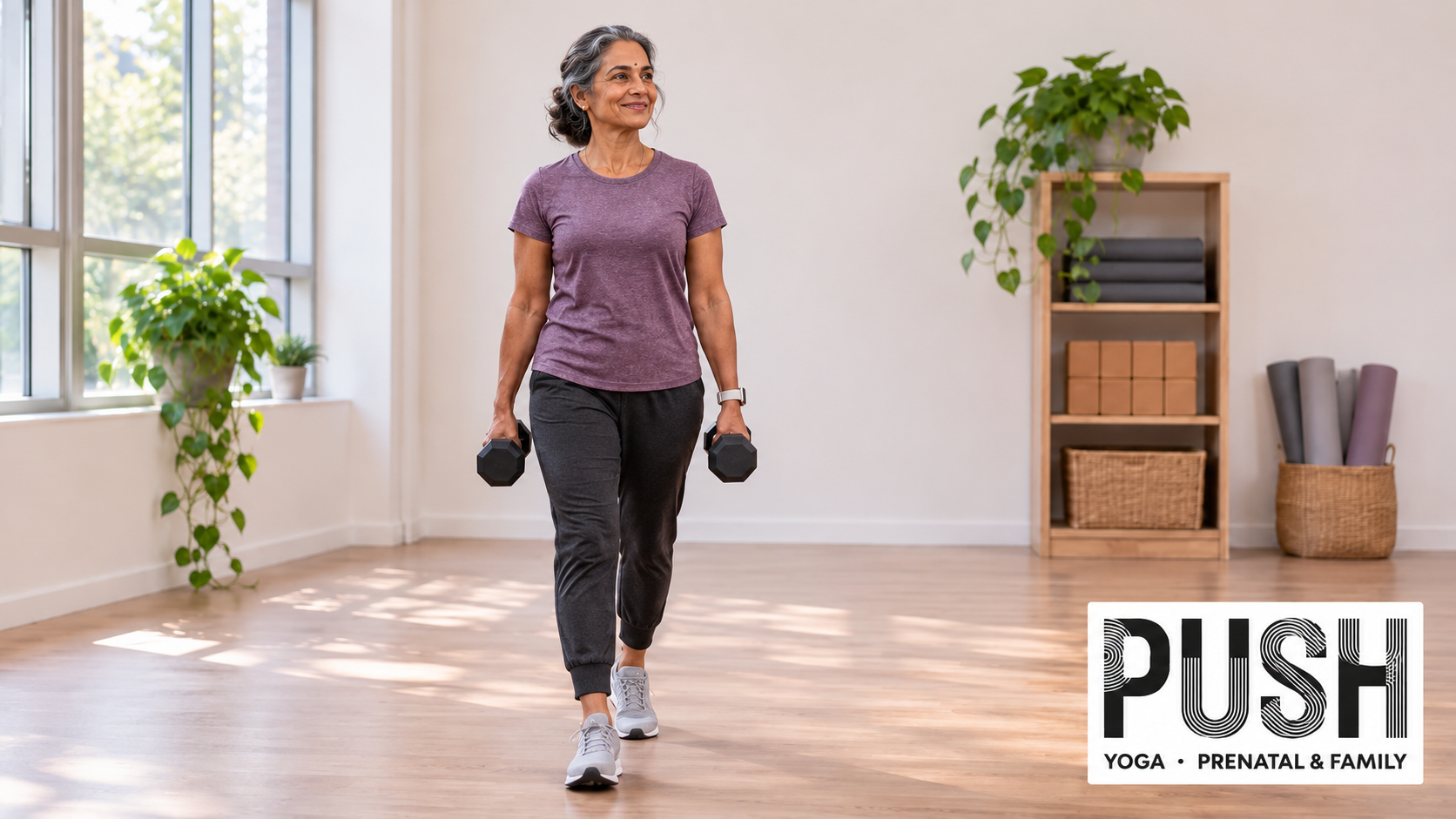
You do not need to begin with heavy weights.
But over time, your body needs enough challenge to create adaptation.
The tiny dumbbells you started with do not have to remain the weights you use forever.
Does Strength Training Need to Be Heavy?
“Heavy” is relative.
A challenging weight for someone beginning strength training may be very different from a challenging weight for someone who has trained for years.
The important principle is progression.
As your body becomes stronger, the exercise needs to become appropriately more challenging if you want to continue creating an adaptation.
That might mean:
- Increasing the weight
- Changing the exercise
- Increasing the range of motion
- Adding repetitions
- Progressing to a more challenging variation
If you are new to strength training, have osteoporosis, have experienced fractures, or have other medical concerns, individualized guidance can help you progress safely.
Having low bone density does not automatically mean you should avoid strength training.
It means the program should match your needs.
What Is Weight-Bearing Exercise?
Weight-bearing exercise means activity where you support your body against gravity.
Examples include:
- Walking
- Hiking
- Stair climbing
- Dancing
- Running
- Racquet sports
- Many field and court sports
These activities provide different amounts and types of loading.
Walking is excellent for general health and absolutely worth doing.
But if bone strength is a major goal, walking alone may not provide all the stimulus you want.
Combining regular walking with resistance training — and, when appropriate, higher-impact activity — can create a more complete approach.
What About Jumping and Impact Exercise?
Impact exercise can provide a strong stimulus to bone.
That doesn’t mean everyone should immediately start jumping.
Your appropriate starting point depends on your current fitness, joint health, balance, pelvic floor function, bone health, and exercise experience.
For one person, impact might mean running or jumping.
For another, it may begin with faster walking, stairs, or lower-level impact activities.
If you have osteoporosis, previous fractures, significant joint problems, pelvic floor symptoms, or haven’t exercised in a long time, getting professional guidance before adding higher-impact activity may be helpful.
The goal is appropriate challenge — not reckless challenge.
Is Walking Enough for Bone Health?
Walking deserves a lot of credit.
It’s accessible.
It supports cardiovascular health.
It keeps you active.
It can support mood and metabolic health.
And it is certainly better than being sedentary.
But walking generally provides a relatively familiar, repetitive load to your bones.
If your goal is to build a strong musculoskeletal system as you age, consider adding resistance training.
You don’t need to stop walking.
Add to it.
Walk for your health.
Lift for your muscles and bones.
And when appropriate, include activities that challenge balance and impact tolerance too.
Balance Is Part of Bone Health Too
When we talk about osteoporosis, we often focus entirely on bone density.
But fracture prevention has another important piece:
not falling.
Strength, balance, coordination, vision, medications, environment, and overall mobility can all affect fall risk.
Exercises that challenge balance can therefore become increasingly valuable with age.
That might include:
- Single-leg exercises
- Step-ups
- Lunges
- Tai chi
- Yoga
- Carrying exercises
- Sport and recreational activities
You don’t need to wait until your balance is poor before training it.
Balance is a physical skill.
Like strength, it can be practiced.
Calcium Matters — But Bone Health Is More Than Calcium
Calcium is an important mineral for bone health.
Your body stores much of its calcium in your bones.
Good dietary sources can include:
- Milk
- Yogurt
- Cheese
- Fortified plant beverages
- Calcium-set tofu
- Canned salmon or sardines with bones
- Some leafy greens
- Other calcium-fortified foods
It is often possible to meet calcium needs through food.
Supplements may be appropriate for some people, particularly when dietary intake is insufficient, but more is not automatically better.
If you’re unsure whether you’re getting enough calcium, a registered dietitian or healthcare professional can help you assess your intake.
What About Vitamin D?
Vitamin D helps your body absorb calcium and plays an important role in bone health.
In Canada, where sunlight exposure is limited for part of the year, vitamin D deserves particular attention.
Food sources include certain fortified foods and fatty fish, but it can be difficult to obtain enough vitamin D from food alone.
Supplement recommendations can vary depending on age, dietary intake, medical conditions, and individual circumstances.
Your healthcare provider or pharmacist can help you determine what is appropriate for you.
Protein Supports More Than Muscle
Protein is often discussed in the context of strength training and muscle.
But maintaining muscle is also part of protecting your bones and physical independence.
Muscles help you generate force, maintain balance, and recover when you stumble.
Adequate protein combined with resistance training can help support muscle mass as you age.
Useful sources include:
- Fish
- Poultry
- Meat
- Eggs
- Dairy
- Soy foods
- Tofu
- Lentils
- Beans
- Nuts and seeds
You don’t need to eat like a bodybuilder.
The goal is simply to make adequate protein a regular part of your diet.
Does Body Weight Affect Bone Health?
Body weight and bone health have a complicated relationship.
Very low body weight can be a risk factor for osteoporosis.
At the same time, having a higher body weight does not guarantee protection from fractures or poor bone health.
This is another reason focusing only on the scale can be misleading.
Body composition, muscle strength, physical activity, nutrition, balance, hormones, medications, and medical history all matter.
The goal isn’t simply to weigh more or less.
It’s to build and maintain a strong, capable body.
What About Perimenopause and Body Composition?
Perimenopause can bring several changes at once.
You may notice changes in body-fat distribution.
Muscle can become more difficult to maintain if strength training and nutrition aren’t supporting it.
Sleep may worsen.
Energy may change.
Exercise recovery may feel different.
Meanwhile, bone loss begins to become more relevant as estrogen declines.
This is why midlife can be a useful time to shift the way you think about exercise.
Instead of exercising only to burn calories, consider what you’re building.
Muscle.
Bone.
Cardiovascular fitness.
Balance.
Mobility.
Capacity.
The workout that helps you feel strong today is also an investment in the body you’ll be living in decades from now.
Can Yoga and Pilates Help Bone Health?
Yoga and Pilates can contribute to strength, balance, coordination, mobility, and body awareness.
Those are all valuable.
But depending on the class and exercises, they may not provide enough progressive resistance on their own to maximize muscle and bone-strengthening benefits.
You don’t have to choose.
Yoga or Pilates can be part of your routine alongside resistance training and other weight-bearing activity.
Different types of movement provide different benefits.
What If I Already Have Osteoporosis?
An osteoporosis diagnosis does not mean you should stop exercising.
In fact, appropriate exercise is an important part of osteoporosis management.
But your exercise program may need to be individualized. “Depending on your fracture risk, treament may also include medication prescribed by your healthcare provider.”
Depending on your bone density, fracture history, strength, balance, and other health factors, certain movements or activities may need to be modified.
A physiotherapist or appropriately qualified exercise professional can help determine how to challenge your body safely.
The goal is not to become afraid of movement.
It is to become stronger and more confident within the context of your individual health.
Should I Get a Bone Density Test?
A bone mineral density test — often called a BMD or DXA scan — can help assess bone density and fracture risk.
Not every healthy woman in her 40s needs one.
In Canada, screening recommendations consider age and individual risk factors rather than simply testing everyone as soon as perimenopause begins.
Earlier assessment may be appropriate if you have important risk factors such as a fragility fracture, prolonged use of certain medications, very low body weight, or medical conditions associated with bone loss.
If you’re wondering about your own risk, discuss it with your healthcare provider.
A screening decision should be based on your individual history rather than fear.
What Is a Fragility Fracture?
A fragility fracture is a fracture that occurs from a relatively low level of trauma — for example, a fall from standing height that would not normally be expected to break a healthy bone.
A fragility fracture can be an important clue that bone strength needs further assessment.
If you’ve experienced a fracture from a relatively minor fall or injury, mention it to your healthcare provider even if the fracture has already healed.
It may change whether further bone-health assessment is recommended.
Bone Health Isn’t Only About Preventing Osteoporosis
It can be easy to make this entire conversation about avoiding disease.
But there is a more positive way to think about it.
Strong bones are part of a strong body.
And a strong body gives you options.
It lets you:
Travel.
Carry luggage.
Play sports.
Hike.
Garden.
Pick up your children or grandchildren.
Walk confidently on an icy sidewalk.
Get up from the floor.
Stay active with friends.
Continue doing things for yourself.
Bone health is ultimately about maintaining the physical capacity to participate in your life.
Frequently Asked Questions About Bone Health After 40
When should women start thinking about bone health?
Ideally, long before osteoporosis develops.
Bone health is built across the lifespan, but the years approaching menopause are an especially useful time to review exercise, nutrition, lifestyle, and individual risk factors.
Does perimenopause cause bone loss?
Bone loss becomes increasingly relevant through the menopause transition as estrogen levels decline, with bone loss accelerating around menopause.
That makes strength training, adequate nutrition, and awareness of individual osteoporosis risk particularly important during midlife.
What is the best exercise for bone health?
There isn’t one perfect exercise.
A combination of progressive resistance training, weight-bearing activity, balance training, and appropriate impact exercise generally provides a more complete approach than relying on one activity alone.
Is walking enough to prevent osteoporosis?
Walking is beneficial for overall health and should absolutely be encouraged.
However, walking alone may not provide enough stimulus to optimize bone strength. Resistance training and, where appropriate, higher-impact activity can add important benefits.
Can I lift weights if I have osteoporosis?
Many people with osteoporosis can and should participate in appropriately designed resistance exercise.
Your program may need to be modified based on your bone health, fracture history, strength, and other medical considerations.
Do I need calcium supplements?
Not necessarily.
Many people can obtain adequate calcium through food.
If your dietary intake is insufficient, supplementation may be appropriate. Speak with a healthcare professional or dietitian about your individual needs rather than assuming that more calcium is always better.
Does vitamin D matter for bone health?
Yes.
Vitamin D supports calcium absorption and bone health.
Individual supplementation needs vary, so discuss appropriate intake with your healthcare provider or pharmacist.
How do I know if I have osteoporosis?
Osteoporosis usually does not cause obvious symptoms until a fracture occurs.
Bone mineral density testing and clinical risk assessment can help identify people at increased fracture risk.
Is it too late to start strength training in my 50s or 60s?
No.
Muscles remain responsive to resistance training as we age, and appropriately prescribed exercise can support strength, balance, function, and bone health.
Starting later is still worth starting.
Build the Body You Want to Grow Older In
It is easy to think about exercise in terms of what you can see.
Weight.
Waist size.
Muscle definition.
But some of the most important benefits are happening where you can’t see them.
Your bones are adapting.
Your muscles are getting stronger.
Your balance is improving.
Your body is becoming more capable of handling the demands you place on it.
At PUSH Markham, we believe movement should support more than how your body looks today.
It should support what you want your body to keep doing tomorrow.
And ten years from now.
And twenty years from now.
You don’t need to wait for an osteoporosis diagnosis to care about your bones.
Strength training, regular movement, adequate nutrition, and understanding your individual risk can all become part of how you take care of yourself through perimenopause, menopause, and beyond.
Because the goal isn’t simply to live longer.
It’s to stay strong enough to keep living the life you want.
Want to build strength for the years ahead?
Explore strength training, physiotherapy, movement, and women’s wellness support at PUSH Markham and find an approach that works for your body and your goals.