Learn how exercise needs may change during perimenopause, including strength training, cardio, bone health, pelvic health, recovery and how to stay active.
Understanding How to Support Your Body Through the Menopause Transition
Maybe the workouts you’ve always done suddenly feel harder.
You’re more tired after exercise. Recovery seems to take longer. Your joints feel a little stiffer. Your body composition is changing even though your routine hasn’t. Or perhaps sleep, hot flashes, stress, or a busy schedule have made exercise feel harder to fit into your life in the first place.
If movement feels different during perimenopause, you’re not imagining it.
Perimenopause is a time of hormonal change, but it is also a stage of life when sleep, stress, work, family responsibilities, and natural age-related changes can all influence how your body feels and responds to exercise.
The good news? Movement remains one of the most valuable things you can do for your long-term health during this transition.
The goal isn’t necessarily to exercise more. It may be about exercising differently — building strength, supporting your bones and heart, maintaining mobility, and giving your body enough time to recover.
What Happens to Your Body During Perimenopause?
Perimenopause refers to the years leading up to menopause, when levels of estrogen and progesterone begin to fluctuate.
For many women, this transition begins sometime in their 40s, although it can begin earlier.
Changes in hormones can contribute to symptoms such as:
- Irregular menstrual cycles
- Hot flashes and night sweats
- Changes in sleep
- Mood changes
- Fatigue
- Changes in body composition
- Joint or muscle discomfort
- Changes in pelvic or vaginal health
- Brain fog or difficulty concentrating
At the same time, changes associated with aging — including gradual losses in muscle mass and bone density — become increasingly important.
This is one reason movement during perimenopause is about much more than managing weight.
Exercise can be an important way to support your strength, bones, cardiovascular health, mobility, mental health, and independence for the years ahead.
Should You Exercise Differently During Perimenopause?
There isn’t one perfect “perimenopause workout.”
And you don’t need to abandon activities you already enjoy simply because you’ve entered a new stage of life.
Instead, this can be a useful time to look at whether your current routine is giving your body what it needs.
If most of your exercise has traditionally been walking, running, cycling, or other cardiovascular activity, adding resistance training may become increasingly valuable.
If you already train regularly, you may find that recovery, sleep, or joint discomfort occasionally affects how hard you want to push.
And if you haven’t exercised consistently in years, that’s okay too.
You don’t need to suddenly train six days a week. Starting with manageable, sustainable movement is far more useful than creating an intense routine that is difficult to maintain.
Why Strength Training Matters During Perimenopause
Strength training becomes especially important as we age.
Beginning in adulthood, we gradually lose muscle mass unless we actively work to maintain it. Hormonal changes around menopause may further influence muscle and bone health.
Resistance exercise provides your body with a reason to maintain — and potentially build — muscle.
Strength training may include:
- Dumbbells or free weights
- Resistance bands
- Weight machines
- Bodyweight exercises
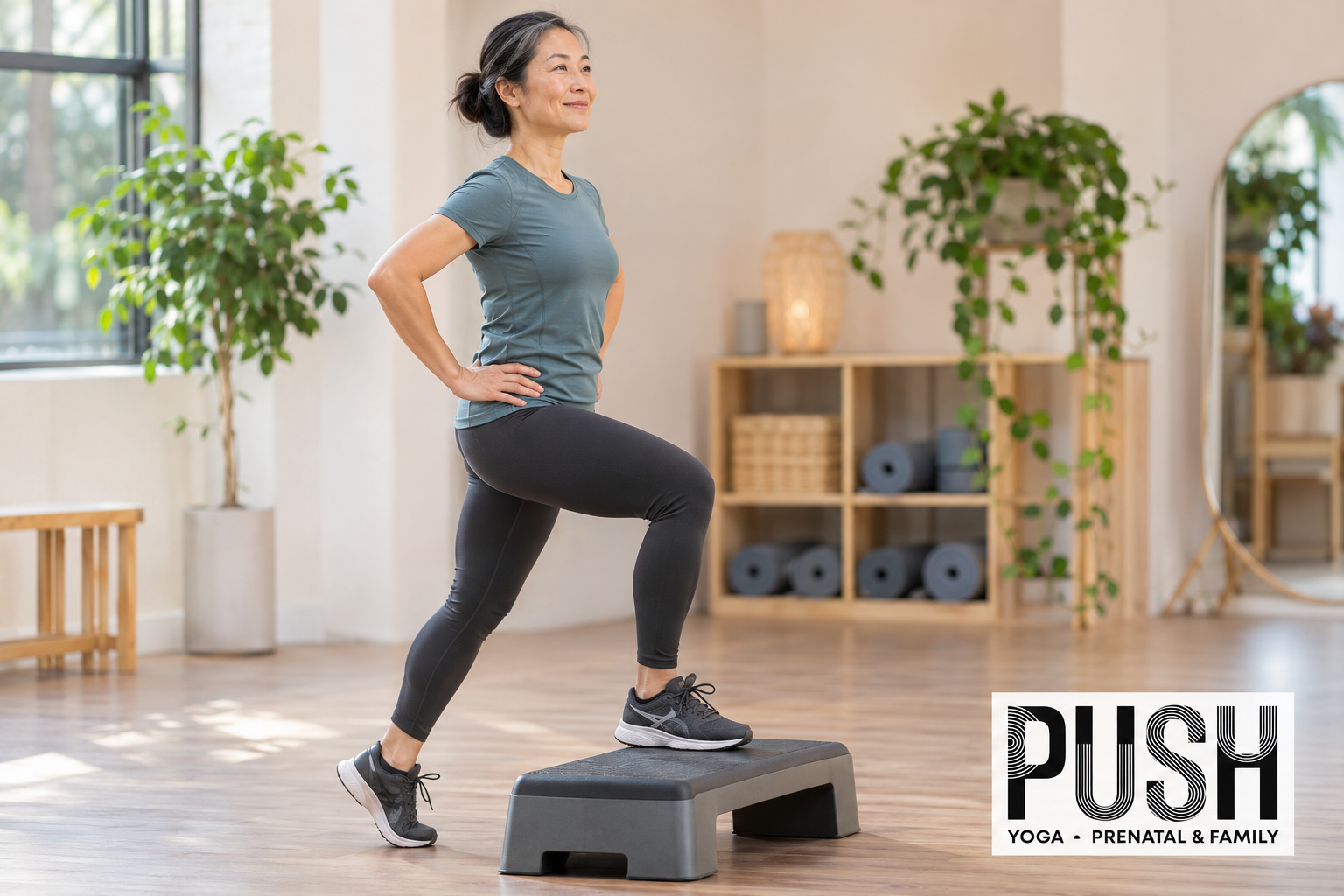
- Squats and lunges
- Pushing and pulling movements
- Carrying exercises
- Progressive resistance exercises
You do not need to become a powerlifter or spend hours in a gym to benefit.
The important part is giving your muscles an appropriate challenge and gradually progressing as your strength improves.
For women who have never lifted weights before, learning proper technique and starting at an appropriate level can make strength training feel much less intimidating.
Exercise and Bone Health
Bone health deserves more attention during the menopause transition.
Estrogen plays an important role in maintaining bone. As estrogen levels decline around menopause, bone loss can accelerate, increasing the importance of habits that help preserve bone strength.
Resistance training and weight-bearing exercise can both play a role in supporting bone health.
Weight-bearing activities may include:
- Walking
- Hiking
- Dancing
- Stair climbing
- Running or jogging, when appropriate
- Racquet sports
- Some forms of higher-impact exercise
Resistance training is also important because stronger muscles can support balance, function, and the ability to stay active over time.
Your ideal exercise routine will depend on your current health, exercise experience, injuries, and individual risk factors.
What About Cardio?
Cardiovascular exercise still matters.
Walking, running, cycling, swimming, dancing, hiking, fitness classes, and other activities that raise your heart rate can support cardiovascular fitness and overall health.
You don’t have to choose between cardio and strength training.
For most women, a balanced routine that includes both is more useful than focusing exclusively on one type of exercise.
And cardio does not have to mean spending an hour on a treadmill.
A brisk walk, bike ride, dance class, recreational sport, or shorter periods of more vigorous activity can all count.
The best form of cardio is often one you actually enjoy enough to keep doing.
Walking Is Valuable — But Is It Enough?
Walking is an excellent form of movement.
It is accessible, supports cardiovascular health, gets you outside, and can be beneficial for both physical and mental well-being.
So if you enjoy walking, keep walking.
But as you move through perimenopause and beyond, walking alone may not provide enough resistance to fully address muscle and bone health.
Think of walking and strength training as complementary rather than competing forms of exercise.
Your walks support one part of your health. Strength work supports another.
You don’t have to give one up to make room for the other.
What If Exercise Feels Harder Than It Used To?
This can be one of the more frustrating parts of the transition.
You may remember what your body could do five or ten years ago and wonder why the same workout now feels so different.
There are many possible reasons.
Night sweats and disrupted sleep can leave you tired before you even begin. Work and family responsibilities may have increased. Stress can affect both energy and recovery. Joint or muscle discomfort may change the way you move.
And sometimes your body simply needs a different balance of training and recovery than it once did.
That does not mean you should stop challenging yourself.
It means paying attention to what your body is telling you.
Some days may be great days to lift heavier, run, or take a challenging class. Other days, a walk, mobility session, yoga class, or lighter workout may be exactly what you need.
Consistency matters more than having every workout feel perfect.
Recovery Matters Too
Exercise creates a challenge for your body. Recovery is when your body adapts to that challenge.
That makes recovery part of training — not something separate from it.
Sleep, nutrition, hydration, stress, and adequate time between challenging workouts can all influence how you feel.
During perimenopause, sleep can become particularly complicated. Night sweats, waking during the night, anxiety, or changes in sleep patterns may mean that you occasionally start a workout already under-recovered.
Rather than viewing a lighter day as a failure, think about your exercise routine over weeks and months.
One modified workout does not undo your progress.
What About Weight Gain During Perimenopause?
Changes in weight and body composition are common concerns during the menopause transition.
Some women notice that fat distribution changes, particularly around the abdomen, even when the number on the scale has not changed dramatically.
Hormonal changes can contribute, but they are only part of the picture. Aging, muscle mass, sleep, stress, nutrition, activity levels, and genetics can all play a role.
Exercise can help support healthy body composition, but trying to “burn off” every calorie through increasingly intense workouts is unlikely to be a sustainable strategy.
Strength training is particularly useful because maintaining muscle supports physical function and metabolic health.
It can also help shift the focus away from making your body smaller and toward making it stronger and more capable.
Don’t Forget Your Pelvic Floor
Pelvic health can change during perimenopause too.
Some women begin to notice symptoms such as:
- Urinary leakage
- Increased urgency
- Pelvic pressure or heaviness
- Vaginal dryness
- Discomfort during intercourse
- Difficulty comfortably performing certain exercises
These symptoms are common, but that doesn’t mean you simply have to live with them.
And leaking during running, jumping, or lifting does not automatically mean those activities need to disappear from your life.
A pelvic floor physiotherapist can assess what is contributing to your symptoms and help you develop an individualized approach to movement.
Pelvic floor rehabilitation is also about more than doing Kegels. Strength, coordination, breathing, pressure management, mobility, and the rest of your body can all play a role.
Yoga, Pilates, and Mobility Still Have a Place
Strength and cardiovascular exercise receive a lot of attention — appropriately — but your exercise routine doesn’t need to consist entirely of lifting weights and cardio.
Yoga, Pilates, stretching, and mobility work can support movement, balance, body awareness, and flexibility.
They may also simply be activities you enjoy.
That matters.
A sustainable exercise routine can include different types of movement for different reasons.
A strength workout might challenge your muscles. A brisk walk may support cardiovascular health and clear your head. A yoga class may give you time to move, breathe, and slow down.
Your routine does not need to fit into a single category.
What If You’re Starting Exercise in Your 40s or 50s?
You have not missed your chance.
It is easy to look at fitness messaging and feel as though everyone else has been exercising consistently for years.
They haven’t.
Many women begin strength training or return to regular exercise in midlife.
Start where you are.
That may mean learning a few foundational strength movements. It could mean walking consistently before adding more vigorous cardio. It may mean working with a physiotherapist because pain has been keeping you from exercising comfortably.
You do not have to be “fit enough” before you begin.
Your starting point is simply your starting point.
Building a Balanced Exercise Routine During Perimenopause
Your exact routine should reflect your health, goals, experience, schedule, and the activities you enjoy.
In general, a balanced approach may include:
- Regular strength or resistance training
- Cardiovascular activity
- Weight-bearing movement
- Mobility and flexibility work
- Balance exercises
- Adequate recovery
- Everyday movement such as walking
You also do not need to do everything every day.
For someone who is busy, two strength sessions, regular walking, and another activity you enjoy may be a much more realistic starting point than trying to follow a complicated seven-day fitness plan.
Build from there.
When Should You Get Extra Support?
Consider speaking with a healthcare professional if symptoms are making exercise difficult or you’re unsure how to return safely after an injury or extended break.
It may also be helpful to seek guidance if you experience:
- Persistent joint or muscle pain
- Pelvic pain or pressure
- Urinary leakage during exercise
- Significant fatigue
- Dizziness or unusual shortness of breath
- Heavy or unusual bleeding
- New or worsening symptoms
- Difficulty knowing how to exercise around an existing health condition
The goal isn’t to make exercise complicated.
Sometimes a little guidance can make movement feel more comfortable and give you the confidence to progress.
Frequently Asked Questions About Perimenopause and Exercise
What is the best exercise during perimenopause?
There isn’t one single best exercise.
A well-rounded routine generally includes resistance training, cardiovascular activity, weight-bearing movement, and exercises that support mobility and balance.
The best routine is also one that works with your health, schedule, goals, and preferences.
Should women lift weights during perimenopause?
Resistance training can be particularly valuable during the menopause transition because it helps maintain or build muscle and supports bone health and physical function.
If strength training is new to you, start gradually and focus on learning good technique.
Is walking enough exercise during perimenopause?
Walking is an excellent form of physical activity and is worth continuing.
However, walking does not provide the same muscular challenge as progressive resistance training. Adding strength work can help support muscle and bone health as you age.
Can I still run during perimenopause?
For many women, yes.
There is no general rule that says you need to stop running during perimenopause.
If pain, pelvic pressure, urinary leakage, or other symptoms are making running uncomfortable, consider an assessment rather than assuming you need to give it up altogether.
Can exercise help with perimenopause symptoms?
Regular physical activity can support overall health, mood, sleep, cardiovascular fitness, muscle strength, bone health, and healthy body composition.
Exercise is not a guaranteed treatment for every perimenopause symptom, however, and significant or disruptive symptoms should be discussed with a healthcare provider.
What if I’m too tired to exercise?
Fatigue can make movement difficult, particularly when sleep is being disrupted.
You don’t necessarily have to choose between a full workout and doing nothing. A shorter strength session, walk, gentle yoga class, or lighter workout may be more manageable on lower-energy days.
Persistent or significant fatigue should also be discussed with a healthcare provider, as not all fatigue during midlife is caused by perimenopause.
Moving Through Perimenopause With Strength
Perimenopause can make your body feel unfamiliar at times.
But this stage of life does not have to mean doing less.
It may simply be an opportunity to become more intentional about how you move.
Strength training, cardiovascular activity, mobility, recovery, and pelvic health can all have a place. Your routine can be challenging without being punishing, flexible without being inconsistent, and focused on what your body can do rather than only how it looks.
At PUSH Markham, we believe movement should support the life you want to live.
Whether you’re new to strength training, returning to exercise after time away, navigating pelvic floor symptoms, dealing with an injury, or simply trying to understand what your body needs during perimenopause, you don’t have to figure it out on your own.
Our physiotherapy, pelvic health, movement, and fitness services can help you find an approach that feels appropriate for where you are now — and where you want to go next.
Suggested SEO Title Tag:
Perimenopause and Exercise: Strength, Movement & What to Expect
Suggested Meta Description:
Learn how exercise needs may change during perimenopause, including strength training, cardio, bone health, pelvic health, recovery and how to stay active.
Suggested URL:
/perimenopause-and-exercise
Primary Keywords:
perimenopause and exercise
exercise during perimenopause
perimenopause exercise
strength training during perimenopause
Secondary Keywords:
strength training for women over 40
perimenopause weight gain exercise
perimenopause and muscle loss
exercise and menopause
bone health during menopause
pelvic floor perimenopause
women’s fitness Markham
Perimenopause and Exercise: How Your Body and Movement Needs May Change
Understanding How to Support Your Body Through the Menopause Transition
Maybe the workouts you’ve always done suddenly feel harder.
You’re more tired after exercise. Recovery seems to take longer. Your joints feel a little stiffer. Your body composition is changing even though your routine hasn’t. Or perhaps sleep, hot flashes, stress, or a busy schedule have made exercise feel harder to fit into your life in the first place.
If movement feels different during perimenopause, you’re not imagining it.
Perimenopause is a time of hormonal change, but it is also a stage of life when sleep, stress, work, family responsibilities, and natural age-related changes can all influence how your body feels and responds to exercise.
The good news? Movement remains one of the most valuable things you can do for your long-term health during this transition.
The goal isn’t necessarily to exercise more. It may be about exercising differently — building strength, supporting your bones and heart, maintaining mobility, and giving your body enough time to recover.
What Happens to Your Body During Perimenopause?
Perimenopause refers to the years leading up to menopause, when levels of estrogen and progesterone begin to fluctuate.
For many women, this transition begins sometime in their 40s, although it can begin earlier.
Changes in hormones can contribute to symptoms such as:
- Irregular menstrual cycles
- Hot flashes and night sweats
- Changes in sleep
- Mood changes
- Fatigue
- Changes in body composition
- Joint or muscle discomfort
- Changes in pelvic or vaginal health
- Brain fog or difficulty concentrating
At the same time, changes associated with aging — including gradual losses in muscle mass and bone density — become increasingly important.
This is one reason movement during perimenopause is about much more than managing weight.
Exercise can be an important way to support your strength, bones, cardiovascular health, mobility, mental health, and independence for the years ahead.
Should You Exercise Differently During Perimenopause?
There isn’t one perfect “perimenopause workout.”
And you don’t need to abandon activities you already enjoy simply because you’ve entered a new stage of life.
Instead, this can be a useful time to look at whether your current routine is giving your body what it needs.
If most of your exercise has traditionally been walking, running, cycling, or other cardiovascular activity, adding resistance training may become increasingly valuable.
If you already train regularly, you may find that recovery, sleep, or joint discomfort occasionally affects how hard you want to push.
And if you haven’t exercised consistently in years, that’s okay too.
You don’t need to suddenly train six days a week. Starting with manageable, sustainable movement is far more useful than creating an intense routine that is difficult to maintain.
Why Strength Training Matters During Perimenopause
Strength training becomes especially important as we age.
Beginning in adulthood, we gradually lose muscle mass unless we actively work to maintain it. Hormonal changes around menopause may further influence muscle and bone health.
Resistance exercise provides your body with a reason to maintain — and potentially build — muscle.
Strength training may include:
- Dumbbells or free weights
- Resistance bands
- Weight machines
- Bodyweight exercises
- Squats and lunges
- Pushing and pulling movements
- Carrying exercises
- Progressive resistance exercises
You do not need to become a powerlifter or spend hours in a gym to benefit.
The important part is giving your muscles an appropriate challenge and gradually progressing as your strength improves.
For women who have never lifted weights before, learning proper technique and starting at an appropriate level can make strength training feel much less intimidating.
Exercise and Bone Health
Bone health deserves more attention during the menopause transition.
Estrogen plays an important role in maintaining bone. As estrogen levels decline around menopause, bone loss can accelerate, increasing the importance of habits that help preserve bone strength.
Resistance training and weight-bearing exercise can both play a role in supporting bone health.
Weight-bearing activities may include:
- Walking
- Hiking
- Dancing
- Stair climbing
- Running or jogging, when appropriate
- Racquet sports
- Some forms of higher-impact exercise
Resistance training is also important because stronger muscles can support balance, function, and the ability to stay active over time.
Your ideal exercise routine will depend on your current health, exercise experience, injuries, and individual risk factors.
What About Cardio?
Cardiovascular exercise still matters.
Walking, running, cycling, swimming, dancing, hiking, fitness classes, and other activities that raise your heart rate can support cardiovascular fitness and overall health.
You don’t have to choose between cardio and strength training.
For most women, a balanced routine that includes both is more useful than focusing exclusively on one type of exercise.
And cardio does not have to mean spending an hour on a treadmill.
A brisk walk, bike ride, dance class, recreational sport, or shorter periods of more vigorous activity can all count.
The best form of cardio is often one you actually enjoy enough to keep doing.
Walking Is Valuable — But Is It Enough?
Walking is an excellent form of movement.
It is accessible, supports cardiovascular health, gets you outside, and can be beneficial for both physical and mental well-being.
So if you enjoy walking, keep walking.
But as you move through perimenopause and beyond, walking alone may not provide enough resistance to fully address muscle and bone health.
Think of walking and strength training as complementary rather than competing forms of exercise.
Your walks support one part of your health. Strength work supports another.
You don’t have to give one up to make room for the other.
What If Exercise Feels Harder Than It Used To?
This can be one of the more frustrating parts of the transition.
You may remember what your body could do five or ten years ago and wonder why the same workout now feels so different.
There are many possible reasons.
Night sweats and disrupted sleep can leave you tired before you even begin. Work and family responsibilities may have increased. Stress can affect both energy and recovery. Joint or muscle discomfort may change the way you move.
And sometimes your body simply needs a different balance of training and recovery than it once did.
That does not mean you should stop challenging yourself.
It means paying attention to what your body is telling you.
Some days may be great days to lift heavier, run, or take a challenging class. Other days, a walk, mobility session, yoga class, or lighter workout may be exactly what you need.
Consistency matters more than having every workout feel perfect.
Recovery Matters Too
Exercise creates a challenge for your body. Recovery is when your body adapts to that challenge.
That makes recovery part of training — not something separate from it.
Sleep, nutrition, hydration, stress, and adequate time between challenging workouts can all influence how you feel.
During perimenopause, sleep can become particularly complicated. Night sweats, waking during the night, anxiety, or changes in sleep patterns may mean that you occasionally start a workout already under-recovered.
Rather than viewing a lighter day as a failure, think about your exercise routine over weeks and months.
One modified workout does not undo your progress.
What About Weight Gain During Perimenopause?
Changes in weight and body composition are common concerns during the menopause transition.
Some women notice that fat distribution changes, particularly around the abdomen, even when the number on the scale has not changed dramatically.
Hormonal changes can contribute, but they are only part of the picture. Aging, muscle mass, sleep, stress, nutrition, activity levels, and genetics can all play a role.
Exercise can help support healthy body composition, but trying to “burn off” every calorie through increasingly intense workouts is unlikely to be a sustainable strategy.
Strength training is particularly useful because maintaining muscle supports physical function and metabolic health.
It can also help shift the focus away from making your body smaller and toward making it stronger and more capable.
Don’t Forget Your Pelvic Floor
Pelvic health can change during perimenopause too.
Some women begin to notice symptoms such as:
- Urinary leakage
- Increased urgency
- Pelvic pressure or heaviness
- Vaginal dryness
- Discomfort during intercourse
- Difficulty comfortably performing certain exercises
These symptoms are common, but that doesn’t mean you simply have to live with them.
And leaking during running, jumping, or lifting does not automatically mean those activities need to disappear from your life.
A pelvic floor physiotherapist can assess what is contributing to your symptoms and help you develop an individualized approach to movement.
Pelvic floor rehabilitation is also about more than doing Kegels. Strength, coordination, breathing, pressure management, mobility, and the rest of your body can all play a role.
Yoga, Pilates, and Mobility Still Have a Place
Strength and cardiovascular exercise receive a lot of attention — appropriately — but your exercise routine doesn’t need to consist entirely of lifting weights and cardio.
Yoga, Pilates, stretching, and mobility work can support movement, balance, body awareness, and flexibility.
They may also simply be activities you enjoy.
That matters.
A sustainable exercise routine can include different types of movement for different reasons.
A strength workout might challenge your muscles. A brisk walk may support cardiovascular health and clear your head. A yoga class may give you time to move, breathe, and slow down.
Your routine does not need to fit into a single category.
What If You’re Starting Exercise in Your 40s or 50s?
You have not missed your chance.
It is easy to look at fitness messaging and feel as though everyone else has been exercising consistently for years.
They haven’t.
Many women begin strength training or return to regular exercise in midlife.
Start where you are.
That may mean learning a few foundational strength movements. It could mean walking consistently before adding more vigorous cardio. It may mean working with a physiotherapist because pain has been keeping you from exercising comfortably.
You do not have to be “fit enough” before you begin.
Your starting point is simply your starting point.
Building a Balanced Exercise Routine During Perimenopause
Your exact routine should reflect your health, goals, experience, schedule, and the activities you enjoy.
In general, a balanced approach may include:
- Regular strength or resistance training
- Cardiovascular activity
- Weight-bearing movement
- Mobility and flexibility work
- Balance exercises
- Adequate recovery
- Everyday movement such as walking
You also do not need to do everything every day.
For someone who is busy, two strength sessions, regular walking, and another activity you enjoy may be a much more realistic starting point than trying to follow a complicated seven-day fitness plan.
Build from there.
When Should You Get Extra Support?
Consider speaking with a healthcare professional if symptoms are making exercise difficult or you’re unsure how to return safely after an injury or extended break.
It may also be helpful to seek guidance if you experience:
- Persistent joint or muscle pain
- Pelvic pain or pressure
- Urinary leakage during exercise
- Significant fatigue
- Dizziness or unusual shortness of breath
- Heavy or unusual bleeding
- New or worsening symptoms
- Difficulty knowing how to exercise around an existing health condition
The goal isn’t to make exercise complicated.
Sometimes a little guidance can make movement feel more comfortable and give you the confidence to progress.
Frequently Asked Questions About Perimenopause and Exercise
What is the best exercise during perimenopause?
There isn’t one single best exercise.
A well-rounded routine generally includes resistance training, cardiovascular activity, weight-bearing movement, and exercises that support mobility and balance.
The best routine is also one that works with your health, schedule, goals, and preferences.
Should women lift weights during perimenopause?
Resistance training can be particularly valuable during the menopause transition because it helps maintain or build muscle and supports bone health and physical function.
If strength training is new to you, start gradually and focus on learning good technique.
Is walking enough exercise during perimenopause?
Walking is an excellent form of physical activity and is worth continuing.
However, walking does not provide the same muscular challenge as progressive resistance training. Adding strength work can help support muscle and bone health as you age.
Can I still run during perimenopause?
For many women, yes.
There is no general rule that says you need to stop running during perimenopause.
If pain, pelvic pressure, urinary leakage, or other symptoms are making running uncomfortable, consider an assessment rather than assuming you need to give it up altogether.
Can exercise help with perimenopause symptoms?
Regular physical activity can support overall health, mood, sleep, cardiovascular fitness, muscle strength, bone health, and healthy body composition.
Exercise is not a guaranteed treatment for every perimenopause symptom, however, and significant or disruptive symptoms should be discussed with a healthcare provider.
What if I’m too tired to exercise?
Fatigue can make movement difficult, particularly when sleep is being disrupted.
You don’t necessarily have to choose between a full workout and doing nothing. A shorter strength session, walk, gentle yoga class, or lighter workout may be more manageable on lower-energy days.
Persistent or significant fatigue should also be discussed with a healthcare provider, as not all fatigue during midlife is caused by perimenopause.
Moving Through Perimenopause With Strength
Perimenopause can make your body feel unfamiliar at times.
But this stage of life does not have to mean doing less.
It may simply be an opportunity to become more intentional about how you move.
Strength training, cardiovascular activity, mobility, recovery, and pelvic health can all have a place. Your routine can be challenging without being punishing, flexible without being inconsistent, and focused on what your body can do rather than only how it looks.
At PUSH Markham, we believe movement should support the life you want to live.
Whether you’re new to strength training, returning to exercise after time away, navigating pelvic floor symptoms, dealing with an injury, or simply trying to understand what your body needs during perimenopause, you don’t have to figure it out on your own.
Our physiotherapy, pelvic health, movement, and fitness services can help you find an approach that feels appropriate for where you are now — and where you want to go next.
