
In the world of mental health and wellness, you may have recently noticed a specific acronym gaining significant attention online: EMDR. But what exactly is it? How can simple, guided movements help your brain heal from deep emotional wounds? And how does it differ from traditional “talk therapy”?
At PUSH Markham, we take a holistic, body-minded approach to your health. We recognize that emotional and psychological trauma physically stores itself within your nervous system. To help you find lasting relief, we are proud to offer specialized, in-person EMDR therapy in Markham. This comprehensive guide will break down the science behind EMDR, explain exactly how a session works, and help you determine if this evidence-based therapy is the right next step for your healing journey.
Deconstructing the Acronym: What Does EMDR Stand For?
Developed in the late 1980s by psychologist Dr. Francine Shapiro, EMDR stands for Eye Movement Desensitization and Reprocessing.
To truly understand how it functions, it helps to break down what those words mean in a clinical setting:
- Eye Movement: This refers to the intentional, rhythmic, side-to-side tracking movements your eyes make during a session. (Note: Modern EMDR also utilizes other forms of left-right tracking, such as alternating hand-taps or audio tones, collectively known as bilateral stimulation).
- Desensitization: This is the process of lowering the raw, overwhelming emotional and physical charge tied to a painful memory. When a memory is desensitized, thinking about it no longer triggers a racing heart, a knot in your stomach, or a sudden wave of panic.
- Reprocessing: This is the cognitive phase where your brain safely re-wires how the memory is stored. It allows you to replace damaging, painful core beliefs (like “I am helpless” or “I am a failure”) with healthy, adaptive realities (like “It is over, I am safe now,” or “I did the best I could”).
The Science of “Stuck” Memories: Why Talk Therapy Isn’t Always Enough
Traditional counseling and talk therapies are incredibly valuable tools for gaining insight, processing grief, and organizing your thoughts. However, talk therapy primary engages the prefrontal cortex—the logical, language-based part of your brain.
Trauma does not live in the logical brain.
When you experience an overwhelming, terrifying, or highly distressing event your brain’s natural information-processing system can become completely overloaded. Instead of processing the event and moving it into long-term memory, the brain freezes.
The memory can get “trapped” in your brain’s emotional alarm system in its original, raw form. It remains stored alongside the exact sights, sounds, panic, and physical sensations you felt when the event occurred.
Because the memory is stuck, your nervous system perceives a threat that is no longer there. Years later, driving past a hospital, smelling a certain clinical soap, or hearing someone else’s news can instantly fire your alarm system. Your body acts as if the trauma is happening right now. You cannot simply “talk your way out” of a physical survival response. Your body, brain, and nervous system require a physiological intervention to unlock that stuck data.
How EMDR Works: The Power of Bilateral Stimulation
EMDR works by directly stimulating the brain’s natural, physically-based healing mechanism. The core tool used to achieve this is bilateral stimulation (BLS), which simply means stimulating the left and right hemispheres of the brain in an alternating pattern.
When you participate in an in-person EMDR session, this might involve:
- Following your therapist’s fingers or a light with your eyes as they move back and forth.
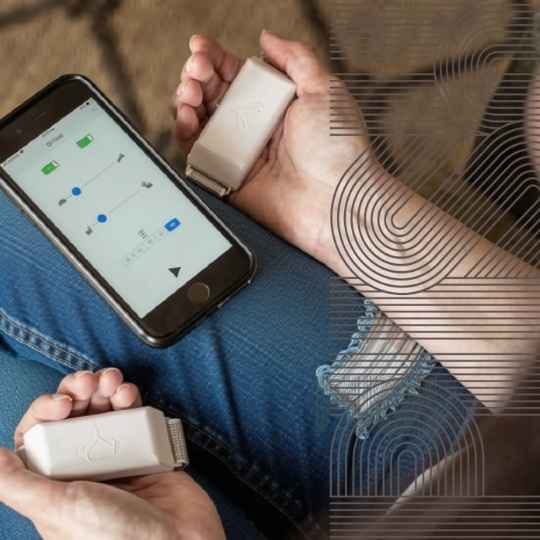
- Holding small, comfortable buzzing paddles in your hands that gently vibrate alternatingly.
- Listening to quiet, alternating audio tones through headphones.
Neuroscientists believe that this rhythmic left-right stimulation mimics the natural cognitive processing that takes place during REM (Rapid Eye Movement) sleep—the exact sleep phase where your brain naturally sorts, organizes, and files away the events of your day.
By activating both sides of the brain while gently holding the traumatic memory in your awareness, EMDR forces the nervous system to unlock the stuck memory. It allows the information to move out of the emotional alarm system and into the logical cortex. The memory isn’t erased—you will still remember that the event happened—but the physical triggers may be lessened.
Interested in learning more about EMDR and if it’s the right fit for you? Schedule a free consultation call with our Social Worker here.